

One of my favorite jokes as a child came from Over the Hedge, a 2006 animated heist comedy made by DreamWorks. Toward the beginning of the movie, a charismatic and manipulative raccoon named RJ convinces a group of woodland animals to help him steal food from a nearby housing development. RJ passes out a Radio Flyer of Girl Scout cookies to the other animals to show them what they’ve been missing. Upon tasting a cookie, a porcupine named Penny turns to her prickle of porcupettes and tells them excitedly: “Kids, eat up! Anything that tastes this good has to be good for you.”
I really did love that line. I was proud to have recognized dramatic irony, if not by name. I was glad to see the wider satire of the movie brought to such a neat point. I was relieved to hear an adult — albeit a quilled one — pressed into the naïve voice for a change. More than anything, I loved how a clear fallacy of wishful thinking unfurled before me. Anything that tastes this good has to be good for you. If only that were true — and what a curious thing that it isn’t.
I think people tend to underestimate the extent to which American politics is reliant on British imports. It’s from the other side of the pond that we’ve come to enjoy the dominance of the Murdoch media empire, the resurgence of nativism, the emergence of right-wing populism, the full force of neoliberalism, the facts of state capture, and the character of managed decline. It’s also how we got the idea of the “nanny state”. The term was brought into British discourse by the Tory politician Iain Macleod in the 1960s and later popularized by Margaret Thatcher in the 1980s. It had made the jump to the American commentariat by the 2000s.
In American parlance, the nanny state refers to the general sense that liberalism is meddling in the lives of individuals “for their own good”. The term, strictly applied, might offer insights. A classic example of the nanny state is a law requiring motorcyclists to wear helmets. In accord with the Millian harm principle, it probably isn’t the government’s direct concern if an adult elects to profoundly disable himself on a patch of wet leaves. But the term tends to be thrown about as an epithet, and here it has proven itself more prejudicial than probative. All sorts of measures that fall well within the remit of any modern government — child nutrition guidelines, anti-smoking campaigns, leaded gasoline bans, and occupational safety standards — are slandered as signs of the nanny state run amok.
The nanny state attack sits within a larger campaign of outrage production and legislative obstruction. In Aristotelian terms, the nanny state charge motivates the pathetic realm of the wider argument. The logical realm of the same argument is managed through institutionalized denialism. This is the phenomenon described by — among other works — Naomi Oreskes and Erik M. Conway’s Merchants of Doubt.
In their 2010 book, Oreskes and Conway set the current controversy over climate change in parallel with earlier controversies over smoking, acid rain, DDT, and the hole in the ozone layer. Oreskes and Conway describe a conspiracy between a handful of contrarian scientists and a web of corporations, lobbyists, and think tanks set on stoking controversy to obscure scientific consensus and obstruct informed regulations. This is a sort of inversion of Edward S. Herman and Noam Chomsky’s Manufacturing Consent into a project of manufacturing dissent.
The issue of the last fifteen years has been that there are no inherent restraints on artificial denialism. Just as science spread in recent centuries to cover every domain of knowledge, anti-science has spread in recent years to cover every domain of ignorance. This proliferation is one of the central issues handled by agnotology, the study of deliberate, culturally induced doubt.
The pattern of the recent past has been for patches of discrete denial to sprawl into a wash of continuous denialism. There was just no way for consensus reality to withstand a prolonged succession of coordinated and deliberate attacks. The collapse of fact happened in two ways — gradually, then suddenly — and the critical moment was, of course, the pandemic.
In the fallout, a strange thing happened. The defiance that had been pushing denialism along was now pulled along by the same. No longer a defense of the status quo, the nanny state claim has become a sort of revolutionary charge.
It’s not surprising that in the face of tremendous economic and political pressure, a group of people — who have denied themselves the testimonial or hermeneutical powers needed to understand such a crisis — would begin a series of regressive fits.
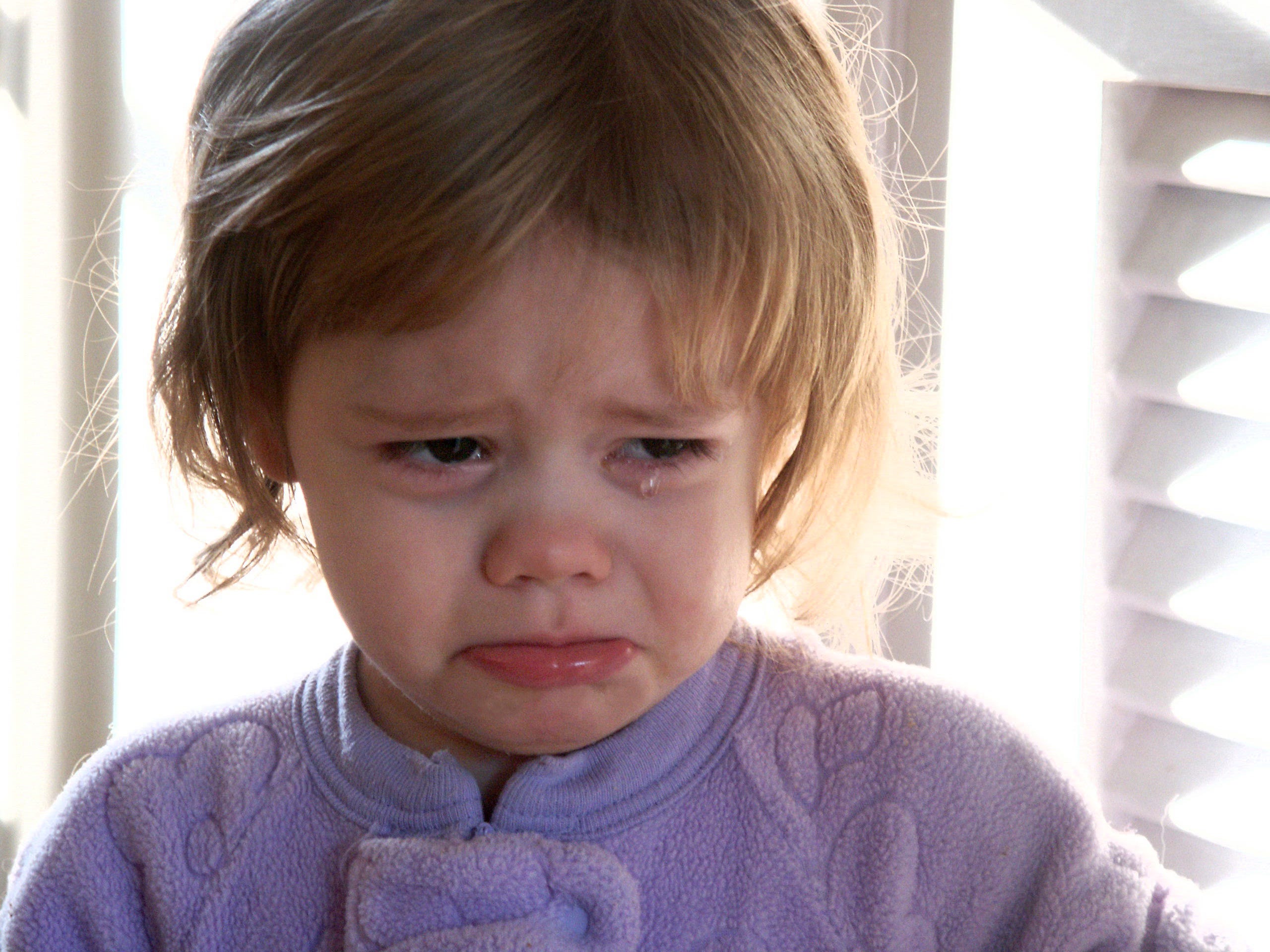
Reader, welcome to the baby state.
Think back to when you were a small child. What were some of your least favorite things? Maybe you hated getting shots from your pediatrician. Maybe you hated wearing sunscreen at the beach. Maybe you hated washing your hands. Maybe you hated eating vegetables.
Consider the hallmarks of the crunchy right. What are the claims you hear from them? Vaccines are at best unnecessary and at worst dangerous. Sunscreen blocks your body’s ability to make vitamin D and contains toxic chemicals. Germs are good for your immune system, and over-sanitizing makes you sick. Vegetables are toxic, and red meat is the most ancestrally appropriate human food.
Anything that tastes good has to be good for you, and anyone who tells you otherwise is trying to poison you. All suggestions are rules, and all rules are oppression. The advice of any expert is helpful insofar as it tells you exactly what not to do. It’s not enough to stay the same. You have to return to the world you grew up in, you have to return to the world your parents grew up in, you have to return to the log cabin, the straw hut, the cave. There can be no inconvenient truths, because convenience is intuition is truth. Salt lowers your blood pressure, and nicotine raises your testosterone. If you must lift weights, fine, just be sure to take enough anabolic steroids.
This goes way beyond a would-be health program. The baby state has grown to contest or dominate most aspects of modern life. How much of conservative policy is nothing more than a temper tantrum about school? How much of conservative politics is some variation of a grown man upset that a Disney princess is now black? All this rests on the same mantra: Think of the children! Think of the children! Can we forget the children for a change? If the Venn diagram of a politician’s campaign issues and a grade-schooler’s grievances is a perfect circle, then perhaps something has gone amiss.
If I were an uncharitable man, I would spin a litany of every rightwing instinct framed as a toddler’s impulse. I would talk about tax cuts as a revolt against sharing. I would talk about pollution as refusal to clean up one’s mess. I would talk about anti-intellectualism as a fear of big words. But this would be artless and unfair — at least to the toddler.
If I were a gentler man, I would offer some kind of material analysis for all this. I would call it something clever like “sour grapes populism”. I would describe a rightwing response to the affordability crisis, in which a subpopulation who can no longer afford groceries or healthcare or education or shelter decides they never wanted those things in the first place. I would take care to paint this as the tragedy it surely is.
The truth is that I strive for neither callousness nor consideration. The truth is that I aspire to cruelty. This seems an appropriate response for a group of people who spent months accusing immigrants of eating dogs before confirming a roadkill gourmand to lead the Department of Health and Human Services. I have heard so much from conservatives about how liberals are importing the third world. I have heard nothing of how these fascists are imitating the very same.
The truth is that in the next ten years, America will look very different. The streets will be full of barefoot, toothless peasants. They will bring disease and filth. They will corrupt your children and destroy your society. You will be ruled by strange people with magic in their heads and worms in their bellies. You will be outnumbered by the illiterate, the malnourished, the unwashed.
And all of them will be native-born.
John, I don't how you don't have a million readers. This essay is evergreen and one the best things I've read all year. It's stuck with me since it was published in July. I have it bookmarked and return to it ever so often. Never have my thoughts on the MAGA movement been so effectively distilled and beautifully described.